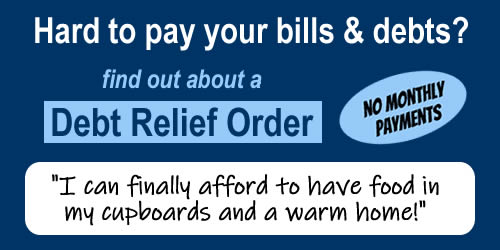
 In a Debt Relief Order (DRO):
- you don’t have to make any monthly payments at all;
- your creditors can’t ask you to pay them, take you to court or send bailiffs;
- at the end of a year, the debts in your DRO are wiped out.
If you meet the DRO criteria, it is often your best debt option, unless you expect your situation to improve a lot very soon.
More than 2,500 people a month choose a DRO. This is what one person said:
My DRO was approved today and I’ve never felt so relieved. I feel like I can finally focus on paying my core bills and making ends meet without worrying about all the debt I owe
This article looks at the important things you need to know about DROs:
- are you are likely to meet the DRO criteria;
- is this is the best option for your financial problems;
- what can happen during a DRO and after it ends.
Contents
Are you eligible for a DRO?
The main criteria
Unlike most of the other debt solutions, you have to be able to meet all of the rules to get a DRO, there isn’t any “wriggle room”. The most important ones are:
- your total debts have to be under £50,000 You can’t decide to leave a debt out to get under this limit;
- you can’t own a house or have a mortgage. This applies even if you only own part of the house, you don’t live in it, the property is in another country, you can’t sell it, or it has negative equity;
- the second-hand value of your assets must be less than £2,000. That doesn’t sound much, but ordinary household objects and clothes etc are not counted at all. There is also an additional allowance for a car, see below. The second-hand value is what you could sell it for, eg on eBay. Few people have a problem with this £2,000 limit;
- you can’t own a car or motorbike worth more than £4,000 You may be able to have a car on finance – read Can I have a car on finance in a DRO for details;
- you must have less than £75 a month spare income after paying all your normal bills and expenses. See below for more about this.
- you can’t have had a DRO within the last 6 years.
The £75 “spare income” test
The hardest rule for most people to understand is that you can’t have a DRO if you have “more than £75 a month spare income“:
- this is the amount of money you have left over after paying your bills and other everyday expenses;
- it doesn’t take into account the payments you are currently making to your debts, because those payments stop in a DRO.
The level of spare income will be assessed by the debt advisor who sets up your DRO. You aren’t expected to live on a very tight budget. You can have some money for Xmas, replacing household goods, kids costs etc
I have come across people who have had an IVA payment of over £150 proposed who would have been easily “under £75” on the DRO criteria.
You don’t need to worry that disability benefits such as DLA or PIP will mean that you have too large an income for a DRO. When you have a disability-related benefit, you are allowed to offset that income with a line called “adult disability expenses.”
Some people who have been struggling with debt repayments find the expenditure allowances surprisingly generous. This may be the first time in a long while that you have any money to spend on clothes.
The quote in the picture at the top of this article from a reader sums this up:
“I can finally afford to have food in my cupboards and a warm home.”
Other technical criteria
Apart from these main rules, some other reasons could stop you from getting a DRO. These are much less common – your DRO adviser will check if any are a problem for you.
A few debts can’t be included
A DRO will clear most kinds of debt, not just money you have borrowed such as credit cards, but also council tax and energy arrears, tax debts and benefit overpayments.
Three that cannot be included in a DRO are:
- student debts;
- magistrate’s court fines, including TV license fines (but fixed penalty charges such as parking fines and the London Congestion Charge can be included); and
- debts incurred through fraud.
See this National Debtline factsheet for a complete list of debts that are included and excluded.
The DRO total debt limit is only for included debts – so if you have a large student loan debt that is ignored in checking if you are under the limit.
What about my partner?
You won’t be refused a DRO because you live with someone who has assets or a good income.
If you and your partner both have debts and want a DRO then you each have to apply for one – there isn’t any such thing as a joint DRO.
If you have a DRO and your partner doesn’t, then they will become fully responsible for any previously joint debts that you had together. This applies to things like council tax arrears and a joint bank loan.
What happens during the year a DRO takes?
“The DRO year”
In a DRO, your debts are cleared after a “moratorium period” of 12 months.
During this year your creditors are not allowed to ask you to pay the debt or take you to court.
No monthly payments during the DRO year
A DRO is designed for people with little or no spare income, so you don’t have to make any monthly payments.
From 6 April 2024, the £90 fee to set up a DRO has been scrapped.
This is a major advantage over an IVA, where you have to make payments for five or six years usually. And over a DMP, which could last a long time if you can only make low payments.
If something changes during the year
Once a DRO has been set up, you will find the DRO very low-key. No one from the Insolvency Service checks what you spend money on or asks for your bank statements,
But if you have a change of circumstances during the year (pay rise? inherit money?) you have to inform the Insolvency Service.
If you no longer meet the DRO criteria, your DRO may be cancelled. This is pretty rare, because often if your income goes up, your benefits are reduced.
It’s best not to try to make affordability or other refund claims while you are in a DRO. Wait until the year has ended and then think about them. BUT if the refund relates to a debt which was included in the DRO the creditor may choose to offset the refund against the debt – even though you think your debt has been written off at the end of the DRO.
Some detailed articles:
- what happens to my DRO if my pay increases or I get a lump sum of money?
- inheriting money in a DRO
- do not take money out of your pension during the DRO year.
A DRO harms your credit score
A DRO is a form of insolvency and has the same bad effect on your credit rating as bankruptcy or an IVA. See how does insolvency affect my credit record? for details.
The DRO marker stays on your credit record for 6 years.
A DRO won’t affect the credit score of anyone else in your house unless you have joint financial products, such as a joint bank account.
At the end of the DRO year
At the end of the DRO year, there is no check that you still meet the requirements. Your DRO simply ends and your debts are written off, see What happens at the end of a DRO?
After the DRO year has ended, you can start to “repair” your credit record. It only gets better slowly until the DRO and the debts in the DRO drop off your credit record.
Who does a DRO suit?
A DRO is frequently the best option with a low income or where much of your income comes from benefits.
This includes:
- where you have caring responsibilities;
- pensioners;
- people with long-term health conditions;
- when you have high childcare costs.
When you only have a short-term money problem, a DRO is unlikely to be your best option. It gets rid of your debts after a year, but it will have a very bad effect on your credit file for six years from when it begins. This downside is well worth it if you have a larger debt problem, but not for a short-term difficulty. Here look at a temporary token payment plan.
If you qualify for a DRO, it is always a better option than an IVA. In a DRO you don’t have to make any monthly repayments and it is very rare for a DRO to fail, but more than a third of IVAs fail, leaving you back with your debts.
DROs affect your credit record for 6 years in the same way that IVAs and bankruptcy do. This can make it harder or impossible to take out new credit at a reasonable interest rate and harder to get a new private tenancy – but if you have large debt problems you may well have a poor credit record anyway.
It is unusual for a DRO to cause any problems with your employment – talk to your adviser if you are worried about this.
How to set up a DRO
Who to talk to
Contact Citizens Advice. They can also help if you have problems with priority debts such as rent arrears.
If you would prefer to do this on the phone, contact National Debtline. Or Business Debtline if you are self-employed.
After the debt adviser decides that you are eligible for a DRO they will talk you through the details. You are often sent an application pack to complete.
Setting up your application
Your adviser does all the necessary checks before submitting your application. This can take two or three months sometimes. Your adviser may set up a Breathing Space for you during this time so you don’t get hassle from creditors.
I’ve looked at some common questions about DRO applications here: DRO application FAQs. But talk to your adviser about anything you are uncertain about or would like confirmed.
This includes:
- anything you have on Hire Purchase or any unusual debts ;
- if you are owed money by someone. Or you expect to get money in the next year, possibly from benefits backdating;
- what happens to bills such as council tax and utilities if you have a partner.
It’s important that all your debts are listed on a DRO as you cannot add another one later. Let your adviser know if you are worried you may owe council tax for previous year, owe HMRC and tax credits ocerpayment, oew the DWP any benefit overpayments, may have parking tickets you haven’t kept track of.
Approving your application
As the adviser makes all the detailed checks, the process of approval is very fast once your application is submitted to the Insolvency Service:
- there is no court hearing;
- no-one visits your house;
- DRO applications are usually approved within 2 working days of being submitted;
- more than 98% of DRO applications are approved.
When your DRO application is approved, the Official Receiver send you a letter called the Debtor’s Notice. Keep this letter safe even when your DRO has finished – it is a simple proof that a debt has been included in your DRO.

Will debt collectors stop calling after a DRO?

Options when you cant pay bills & debts
FAQs about DRO applications
Zita May says
I contacted National Debtline today about applying for a DRO. I have a car on HP that I NEED for work, and I’m up to date with the payments. The car is worth over £4,000, and the adviser told me it means I cannot keep paying for it and therefore I’m not eligible for a DRO. My blood froze in my veins. He didn’t mention the “exceptional circumstances” option or the fact that essential‑use HP vehicles can still be considered if a justification statement is provided (I checked this after the call). He treated the £4,000 rule as absolute, even though the guidance says exceptions can be made when the car is essential for work or basic domestic needs. I’m now confused because the official guidance seems to allow for exceptions, but the adviser dismissed my case outright. What shall I do? Now I am even more self-conscious than before calling them back or contact others.
Sara (Debt Camel) says
How much is the car worth? What are your exceptional circumstances, just needing a car for work?
Is your car HP or PCP?
NW says
Hello. I am looking at a DRO as a debt solution. I wanted to ask what the view was around childcare expenses.
I currently pay someone to support with before and after school care – they are informal and not Ofsted registered – can this be included in the DRO as an expense?
Also can I include my child’s swimming and music lessons?
Sara (Debt Camel) says
I suggest you talk to your local Citizens Advice about this
Ken says
I’ve just had my DRO approved and noticed that one of the creditors names incorrect. It’s a council and they both sound the same phonetically. The reference and amount owed is correct. Have advised the insolvency service and my approved intermediary. Is this something that can be amended without much hassle?
Sara (Debt Camel) says
I would hope so. You adviser should be able to say